
Bio+MedVis Challenge @ IEEE VIS 2026
Monday, November 9, 2026, 12:00 PM - 3:30 PM (EST)
View the program and submissions here.
Challenges
Interested in some hands-on practice with visualizing complex biological and medical data? The Bio+MedVis Challenge is a great opportunity to explore and ideate on new, exciting ways to make sense of high-dimensional datasets from simulations and medical imaging! This year, we have two exciting challenges:
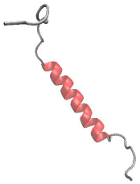
Challenge 1: This challenge is focused on adaptive molecular dynamics simulation data, which is used to explore how biomolecules change their structure and interact with other molecules over time. These simulations can reveal important changes and are essential to drug design. However, they generate large and abstract datasets that make it difficult to explore the changes, compare trajectories, or reason about molecular behavior across entire ensembles.
Learn more about the data and the challenge tasks.
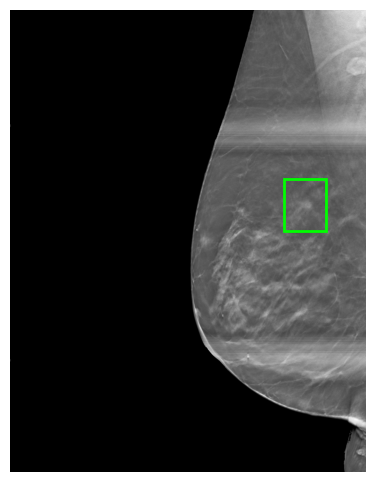
Challenge 2: A challenge based on OMAMA-DB, a large public dataset of 2D and 3D mammography images, combined with metadata, pathology labels, and automated lesion annotations. While this data supports large-scale analysis, it is difficult to explore beyond individual cases, making it challenging to spot patterns, compare annotations, and understand how image data, metadata, and AI-generated labels relate to each other.
Learn more about the data and the challenge tasks.
While some of the tasks in these challenges involve the design of an interactive visualization system, we also welcome submissions with a smaller scope, such as sketches of novel visualization designs and prototypes that do not have to be fully developed.
The authors of accepted submissions will have the opportunity to present their work at the Bio+MedVis Challenge event - a half-day workshop collocated with IEEE VIS 2026 conference (November 9-13, 2026, Boston, USA).
Submission
Each submission is expected to address one or multiple tasks from one of these challenges. If the authors/teams wish to participate in both challenges, they should prepare two separate submissions. The submissions are handled via the PCS submission system. To start the submission, choose VGTC Society, VIS 2026 Conference/Journal, and VIS 2026 Bio+MedVis Challenge Track. To participate, authors will be asked to submit a two-page PDF abstract with up to 5 additional figures. The abstract should include:
- a thorough description and justification of visualization (and analysis) techniques – we encourage the authors to use the space to describe their approach, and keep background and data detail descriptions to a minimum (since this is the part of the challenge definition),
- at least one or more images of the visualization,
- we encourage the authors to submit a supplementary video or screencast (up to five minutes) to explain the visualization approach.
- the two-page abstract must be formatted according to the IEEE VGTC Conference Style Paper Guidelines.
Important Dates
Proceedings (pending approval)
We are currently negotiating the possibility of publishing the conference proceedings in IEEE Xplore. For submission to be considered for publication in proceedings in addition to conference presentation, the following deadlines apply (these deadlines are strict; no extension is possible due to the publisher’s timeline).
- Submission: August 4th, 2026
- Notification: August 12th, 2026
- Camera-ready version: August 19th, 2026
- Bio+MedVis Challenge event: November 9-13, 2026 (half-day event at IEEE VIS 2026, precise date to be specified)
Conference presentation only
We offer an extended deadline for submissions that will be considered only for the conference presentation and will not be included in proceedings.
- Submission: August 24th, 2026
- Notification: September 7th, 2026
- Bio+MedVis Challenge event: November 9-13, 2026 (half-day event at IEEE VIS 2026, precise date to be specified)
All submissions should follow the same guidelines specified above and will be considered as equal contenders for the challenge.
Evaluation
All submissions will be evaluated in a single-round revision process by at least two reviewers, coming from the challenge chairs and selected domain experts. Accepted submissions will be invited to present their results as a talk at the challenge workshop at IEEE VIS 2026 and, optionally, also as a poster at IEEE VIS 2026, and will be published on the challenge website after the conference. They will also have an opportunity to get in touch with the challenge authors to pursue extended follow-up publications.
Strong, creative submissions have the potential for recognition with an Award of Merit or an Award of Excellence. Awards, at the discretion of evaluators, may be given according to the primary author’s status as a Student (BSc/MSc) or Researcher/Professional (PhD and up). In the case of many submissions, Challenge organizers may further subdivide these status categories to better weigh the contribution against the experience of the submitters.
Questions?
Please feel free to send any questions to: biovis_challenge@ieeevis.org.
Chairs of the Bio+MedVis Challenge @ IEEE VIS 2026:
- Katarina Furmanova, Masaryk University, Czech Republic
- Daniel Haehn, University of Massachusetts Boston, USA
- Robert Krueger, New York University, USA